Rule grades
Compare settlement conditions with Same, Close and Different grades.
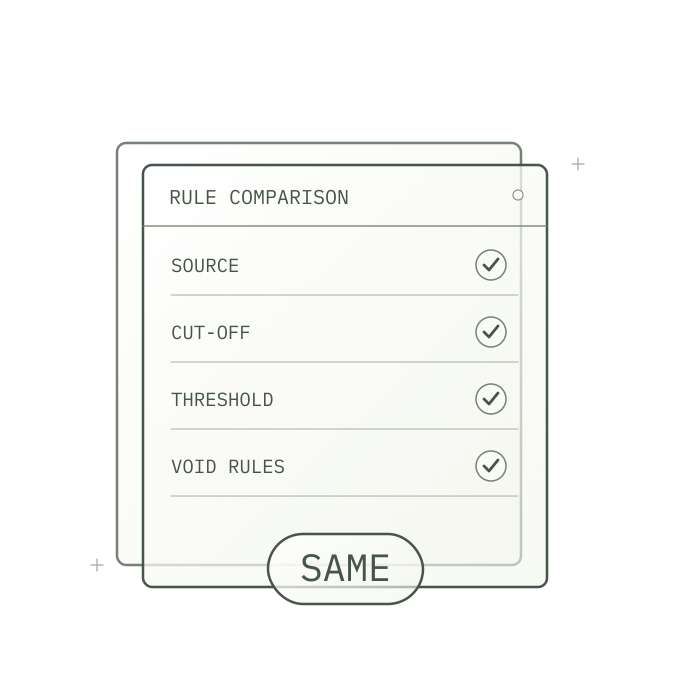
How rule grades work
Compare the resolution source, cut-off time, threshold (and whether the threshold itself counts), postponement and void handling of two markets. Same, Close and Different describe how closely the written rules match; two venues can still settle a Same pair differently.
Questions
Wallets, fees, fair lines and rule grades.
What is Hyperodds?
A console for Hyperliquid outcome markets. It lists every market from every deployer, merges matching books, sets each price against a fair line and shows the full cost of an order before you sign it.
Who holds my funds?
You do. You connect your own wallet and approve a trading key for this browser; orders are signed there and go straight to Hyperliquid. Hyperodds never takes custody of funds.
What does a rule grade mean?
Same means no difference was found in the source, cut-off, threshold or void rules. Close means the question is related but one of those terms differs. Different means the prices should not be compared, so no edge is shown. A Same grade compares written rules; it is not a promise that two venues settle alike.
How is the fair line calculated?
Price markets use options surfaces from Deribit, Bybit and CBOE and Hyperliquid perp marks. Sports and events use matching Polymarket and Kalshi quotes. Every line shows its sources, its age and a band, and it is an estimate that can be wrong.
What does it cost?
The Console is free. Orders placed through it carry a 0.10% builder fee on sells, shown on the ticket next to Hyperliquid's own fees, and your wallet approves that rate once.
Are agents, the vault and two-venue trading available?
Not yet. They follow the Console in stages, each with its own usage targets and security work. The roadmap lists every condition.
Open a market.
Review the costs.
Compare live prices, settlement rules and the cost of your order.